Machine Learning


Introduction
Machine Learning is probably the most well known and widely-used form of Artificial Intelligence. The term was popularized by Arthur Samuel in 1959 and highlighted the notion that it is possible for a machine to solve problems “without being explicitly programmed.” The main idea of machine learning is that it is possible to derive a statistical model capable of making predictions (a predictive model) from a dataset (training dataset) in an automated way. This approach has many applications and advantages when compared to human-written code, such as the speed and ease by which these models can be changed and optimized and the ability to find patterns in the dataset that would be very hard for human eyes to detect. There are many current applications of machine learning today—it is almost ubiquitous—from text suggestion on our phones and spam filtering of our email to face recognition and self driving cars.
(See our Quick Thing on ChatGPT & Generative AI for more about artificial intelligence.)
Examples

click image to enlarge
Moderating comments
Instagram uses machine learning to implement an anti-bullying filter for comments. The model takes a user-generated comment and determines if it follows a similar pattern of others that have been previously flagged for abuse.

click image to enlarge
Product recommendations
Most online shopping sites, such as Alibaba, use machine learning to choose which items to show you when purchasing on the site. This is done by analysing the behaviour of other customers with a similar profile as yourself and determining which items have a higher probability of being sold and showing them higher on the results page.
click image to enlarge
Virtual assistants
Alexa, Siri, Google Now: these voice-activated programs running in our phones, TVs, smart speakers, and other devices help us with a variety of tasks in our everyday lives, things like fact-checking during a conversation, creating appointments, getting directions or texting a friend our ETA (estimate time of arrival). They rely heavily on machine learning for speech recognition but also collect data from every interaction we make with the software, data that is used in later interactions to customize the experience.
How do machines learn?
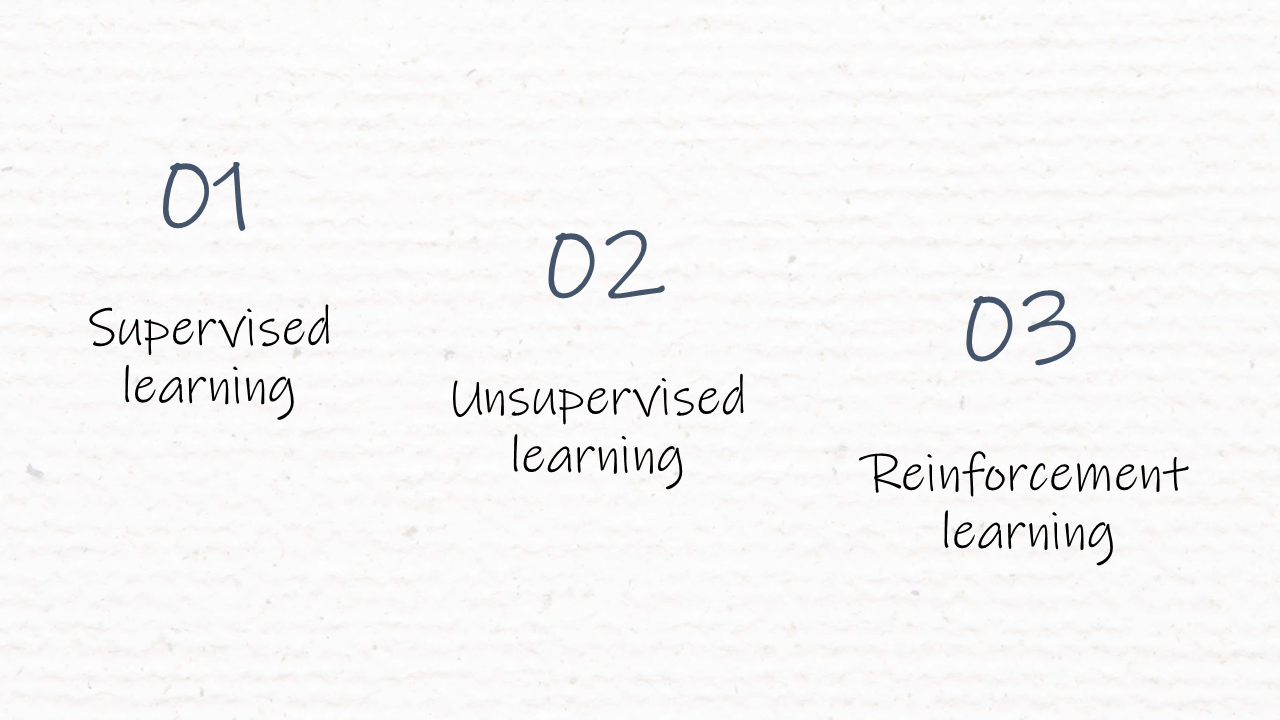
There are three main ways machines can create models based on data: Supervised Learning, Unsupervised Learning and Reinforcement Learning.
click image to enlarge
Supervised Learning
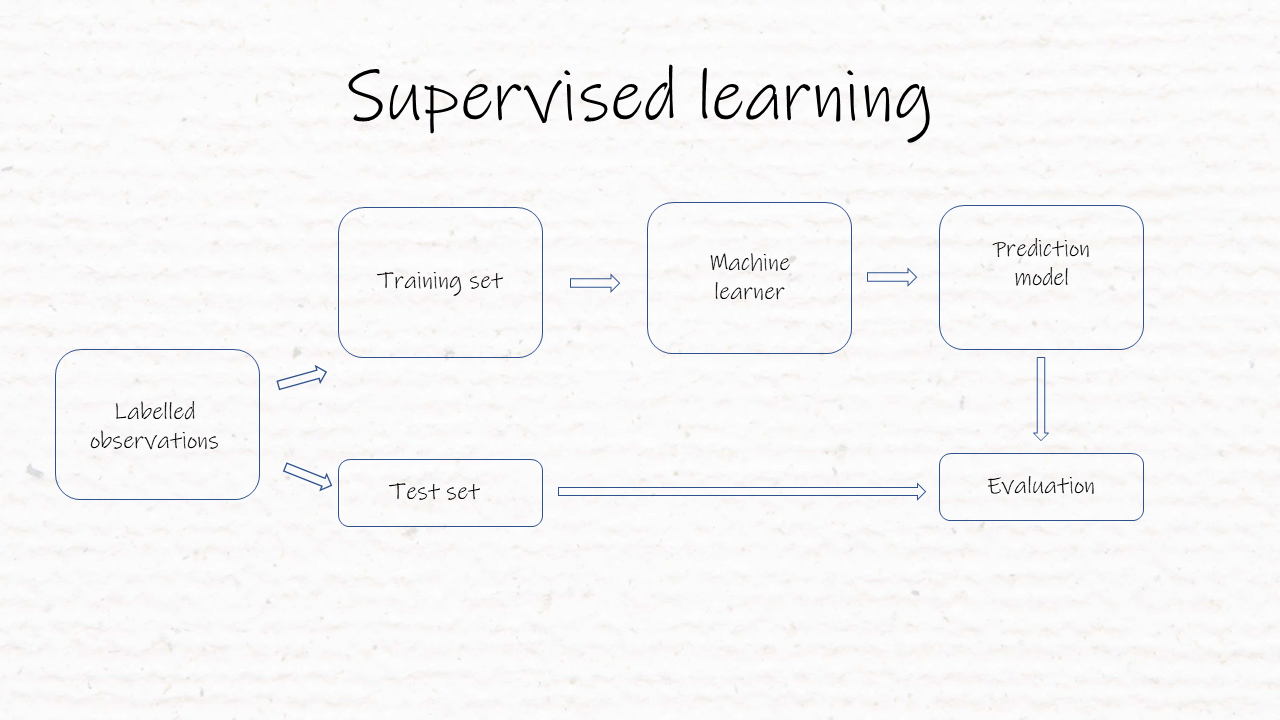
The machine is given a pre-tagged dataset to generate a predictive model. For example, if we wanted to create a model to distinguish a good hotel review from a bad one (what is called sentiment analysis) we will feed the model generator a dataset consisting of the comment and whether the comment is bad or good. After processing, the resulting model will be able to classify a new comment as good or bad with a certain level of accuracy, but it will never be 100% correct.
click image to enlarge
Unsupervised Learning
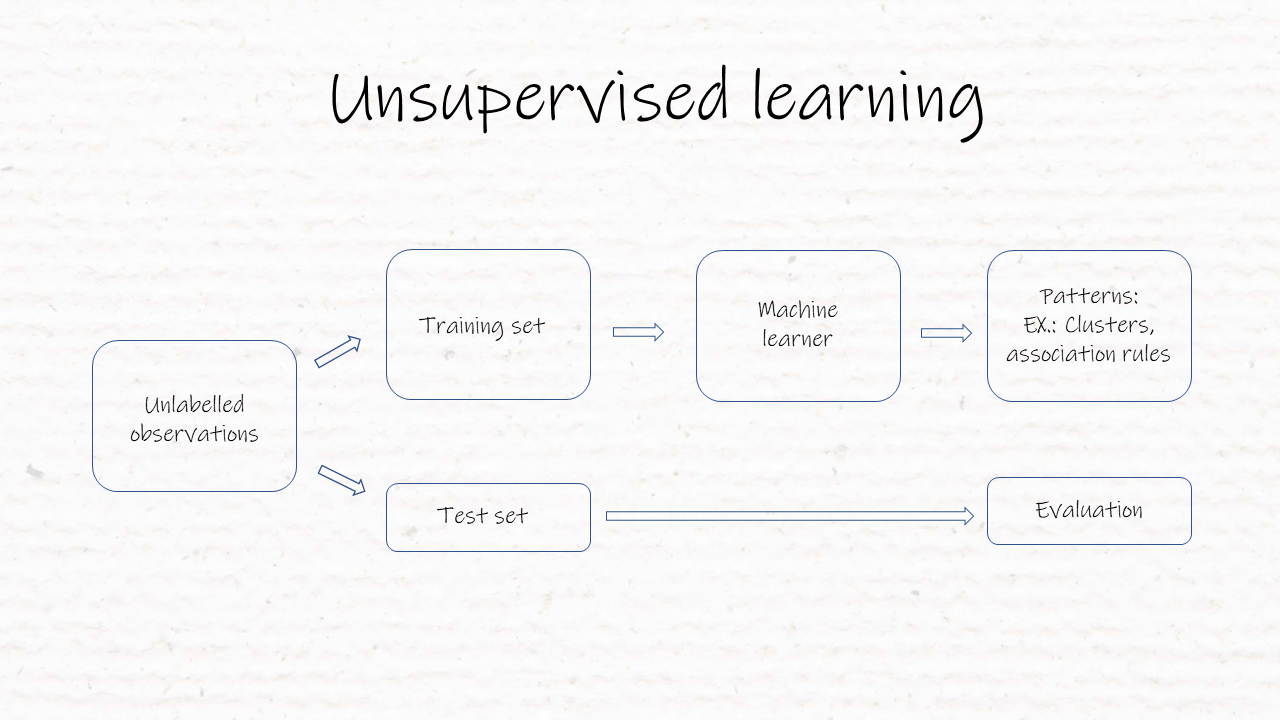
Here the data is fed to the algorithm without any intervention, and the machine will find patterns and group similar data according to these patterns. For example, given a dataset of news articles, an unsupervised learning algorithm could produce a series of clusters that correspond with the nature of the news article, say, sports or economy. This is called topic modelling. However, it is up to a human to make sense and give meaning to those clusters.
click image to enlarge
Reinforcement Learning
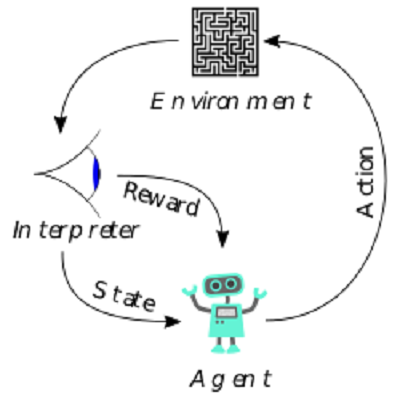
Unlike the other two main forms of machine learning, reinforcement learning doesn’t require a dataset to be provided. Instead, the designers give the computer a set of rules, like the rules of game, and a goal but no hints on how to achieve the goal. The machine will be rewarded or penalized depending on the outcome of the action taken, with the idea of maximizing the rewards while achieving the goal. A very well-known example is AlphaGo Zero. Using reinforcement learning, the computer learned to play the strategy game Go from scratch, by playing against itself. After 40 days of training it was able to defeat the human champion.
click image to enlarge
Quiz
Activities

This activity gives you an opportunity to create and try your own predictive model.

Go to the [ Teachable Machine site ] and follow the instructions to create a model that can recognize two (or more) objects. For example: if you have a favourite coffee mug, you can gather a few others and teach the machine to tell them apart.

This activity should take about 20 minutes to complete.
Are you an undergraduate student participating in the FutureBound program?
After reviewing the content and completing the activities for one of
the Things, you can complete a
reflection form
to have it count as one activity towards your
Digital Capabilities & Mindsets certificate!
Resources

Machine Learning for Absolute Beginners - Level 1
Learn the Fundamental Concepts of Artificial Intelligence and Machine Learning as the Next Game-Changing Technology
See more
The Imitation Game
Alan Turing's original paper from 1950 where he considers, perhaps for the first time, the question "Can machines think?"
See more
Artificial intelligence in practice
Cyber-solutions to real-world business problems. Artificial Intelligence in Practice is a fascinating look into how companies use AI and machine learning to solve problems. Presenting 50 case studies of actual situations, this book demonstrates practical applications to issues faced by businesses around the globe
See moreReferences
Blei, D. Probabilistic Topic Models. Communications of the ACM. 2012, 55(4): 77-84.
Lyons, T. Increasing Our Efforts to Fight False News. Meta, 2018 June 21.
Silver, D., Schrittwieser, J., Simonyan, K. ... Hassabis, D. Mastering the Game of Go Without Human Knowledge. Nature. 2017. 550(7676): 354-359.
Wikipedia. Arthur Samuel. 2023
Wikipedia. Machine Learning. 2023
Bernard, M. & Ward, M. Artificial Intelligence in Practice: How 50 Successful Companies Used Artificial Intelligence to Solve Problems. Chichester, West Sussex: Wiley, 2019.