

Concordia Library Impact Report 2025–2026
On this page:
Highlights from the year
Making knowledge more accessible
Access to knowledge is one of the Library’s defining contributions to the Concordia community. Across the year, Concordians accessed course reserves and open textbooks, downloaded more than a million scholarly articles, requested materials from other institutions, deposited new research in Spectrum, and read open access books published by Concordia University Press—and the Library made all of this more accessible through our heavily-used technology lending program.
Leading AI literacy conversations
Over the past few years, the Library has supported the Concordia community in navigating foundational questions about AI. Building on its early leadership in this emerging area, in 2025–2026, the Library collaborated with several other units across campus and McGill Libraries to develop the GenAI Quickstart for Students modules and expanded its AI literacy web pages with resources for students, faculty, and staff.
Preserving and providing access to unique collections
In 2025–2026, the Library continued its commitment to preserve and provide access to unique records of marginalized groups in Quebec and Canada. Thanks to in-house expertise, the Library advanced two major digital preservation projects that will keep important oral histories and at-risk audio-visual materials accessible for future teaching, learning, research, and community memory.
Looking back on 2025–2026
Every day, Concordia Library connects people with what they need to learn, create, teach, and discover. This Impact Report looks back on a year of supporting students, instructors, researchers, and community members through access to welcoming spaces, trusted expertise, essential resources, distinctive collections, and new opportunities for sharing knowledge. From helping students access the tools and materials they need, to saving students and researchers time and money through shared resources, expert support, and barrier-free access to information, the stories and numbers that follow show the Library team’s work in action.
Student success
Supporting success through equipment loans
Concordia Library works to support student learning. By providing access to essential devices and equipment, we help ensure that every student can fully participate in their academic work.
In 2025–2026, students borrowed laptops and tablets more than 12,900 times, representing an estimated $323,625 in value.
Students also rely heavily on smaller but essential tools to complete their work. Calculators, phone chargers, headphones, and headsets were borrowed nearly 15,000 times over the year. These loans represent an additional $101,430 in value.
Access to equipment through the Library helps reduce financial barriers and ensure that all students have access to the tools they need to succeed.
Leading critical conversations about AI literacy
Since 2023, the Library has been helping our community learn and think about artificial intelligence. This past year, in collaboration with several other units on campus and McGill Libraries, the Library developed GenAI Quickstart for Students, a series of five interactive, bilingual modules. These modules provide students with foundational knowledge and scenarios for thinking through the role AI tools may have in their academic lives. How can students act with academic integrity at the forefront of their choices? How can they be sure that any use of AI supports their learning instead of replacing it?
This year, the Library also expanded the AI literacy section of the website with guidance on critical perspectives, information on academic AI tools, and advice on acknowledging AI use.

GenAI and academic integrity
Understand common academic integrity pitfalls with GenAI

GenAI and professor expectations
Navigate instructors' expectations and academic responsibilities

GenAI tools - when, which and how
Evaluate different tools and their limitations
GenAI and learning
Use GenAI as a learning aid without compromising your learning

GenAI and graduate research
Explore ethical use of GenAI for graduate research
Experiential learning in Special Collections
The Library welcomed two student residents in summer 2025 as part of the Black History Archives Student Residency in Special Collections and Archives. Badewa Ajibade, Humanities (PhD), and Aisha Abdunnur, Economics (BA), spent eight weeks exploring and activating the Black History and community archives in our collection. Residents in this program learn about archives and archival theory; primary and secondary sources; citing archival records; copyright and restrictions; and how to use a finding aid and handle archival material.
Library services for students by students
Since 2010, undergraduates have contributed $1 per credit to the Library Services Fund. The Fund is managed by the Library Services Fund Committee and supports students with carefully conceived resources and services to inspire academic success.
In the 2025–2026 academic year, the Committee approved the following projects:
- New Media & Data Hub featuring Mac minis and specialized software (in progress for fall 2026)
- Professional-grade podcasting equipment that will be made available in a bookable studio (in progress for fall 2026)
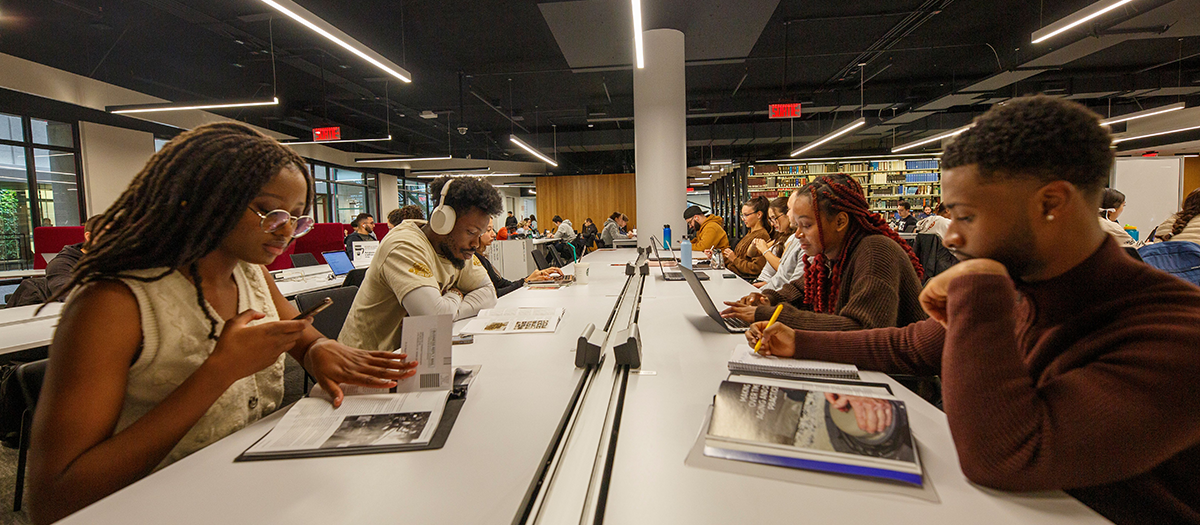
- Two individual study pods in Webster Library (complete), with more to be installed in Webster and Vanier Libraries in future years
- New tablets and equipment for loan: 40 additional iPad Pros (10 at Vanier Library, 30 at Webster Library); 40 keyboard/folio cases; 20 additional Apple Pencils (complete)
- Ongoing funding for:
- Open textbook grants
- 24-hour access to Webster and Vanier Libraries
- Textbook loans through Course Reserves
- Loans of high-demand technology items
- Supplies for the Technology Sandbox
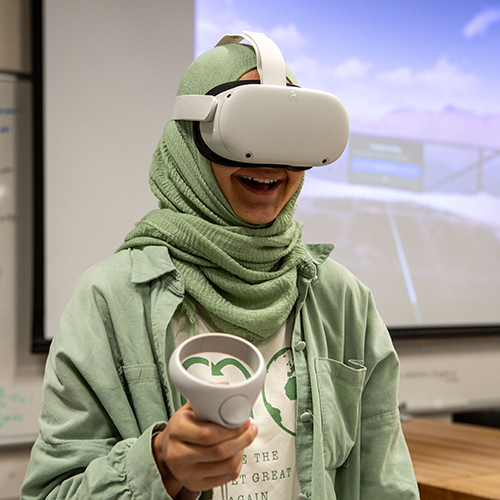
The Technology Sandbox is a popular space for creativity, experimentation and project-based learning in the Library. The Library Services Fund allows for the purchase of specialized equipment and tools that are made available to students at no cost. Through workshops, equipment loans, and self-directed projects, students gain practical experience with technologies such as 3D printing, virtual reality, electronics, video and audio creation and fibre arts. Consumable supplies and equipment replacement are also covered by this fund, keeping these opportunities accessible to all students, allowing for interdisciplinary experimentation and digital skills development.
The Committee has continued bringing artwork from the Art Volt Collection into Library spaces, adding colour, creativity, and a visible connection to Concordia’s emerging artists. Art Volt is an alumni art marketplace for recent graduates of the Faculty of Fine Arts. With support from the Library Services Fund, the Library now showcases three Art Volt works at Vanier Library and four at Webster Library. The artwork is chosen by the Committee each year and highlights a changing selection of recently graduated Concordia artists.
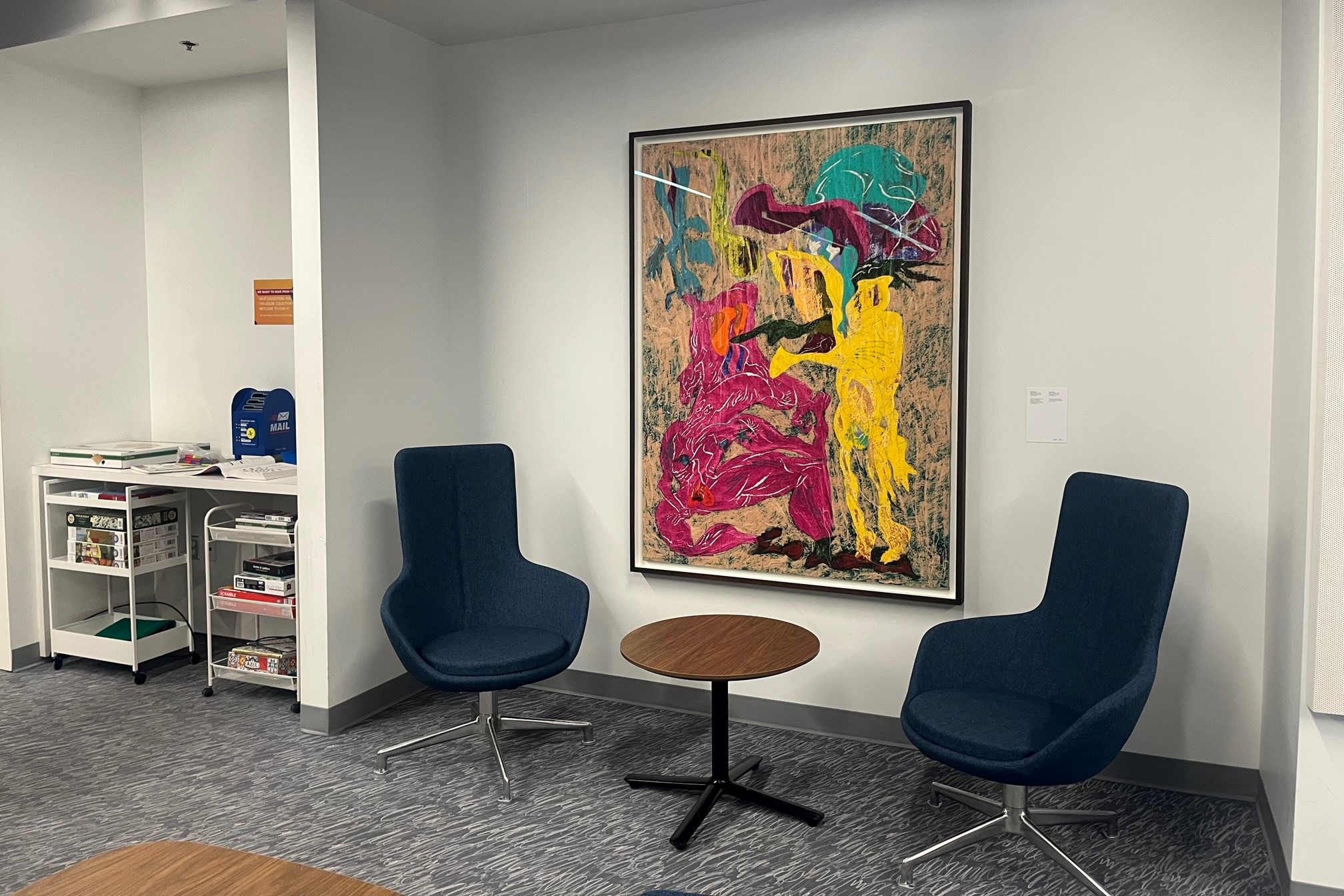
Bata, Gabor. Mouth Breather, 2023, oil pastel on canvas. This work is on loan from the Art Volt Collection and is in the Webster Library's Leisure Space.
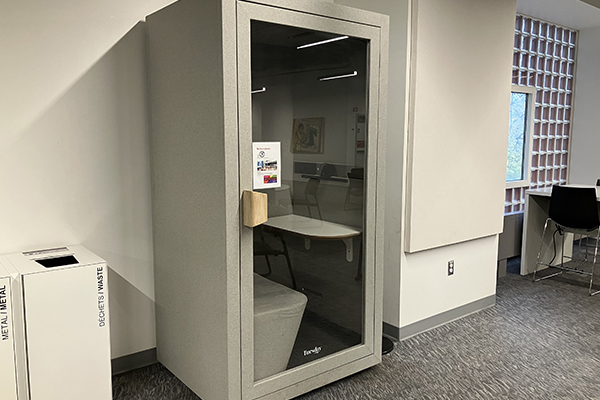
The individual pods in Webster Library provide space for silent study or virtual meetings and job interviews.
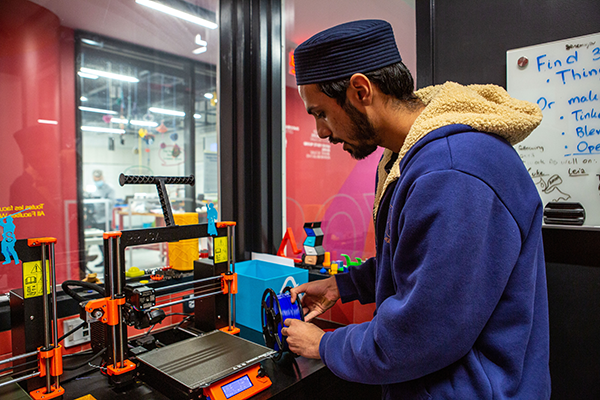
The Technology Sandbox is always a hub of activity with students creating and exploring for their course work and personal interests.
Advancing research and scholarship
Providing vital scholarly resources
The Library’s electronic collections provide access to a vast range of scholarly content, and 1.3 million full-text articles were downloaded this year.
In addition, through interlibrary loan services, students and researchers accessed thousands of articles, chapters, and books from other institutions. The value of these items if purchased individually would have totaled an estimated $487,000.
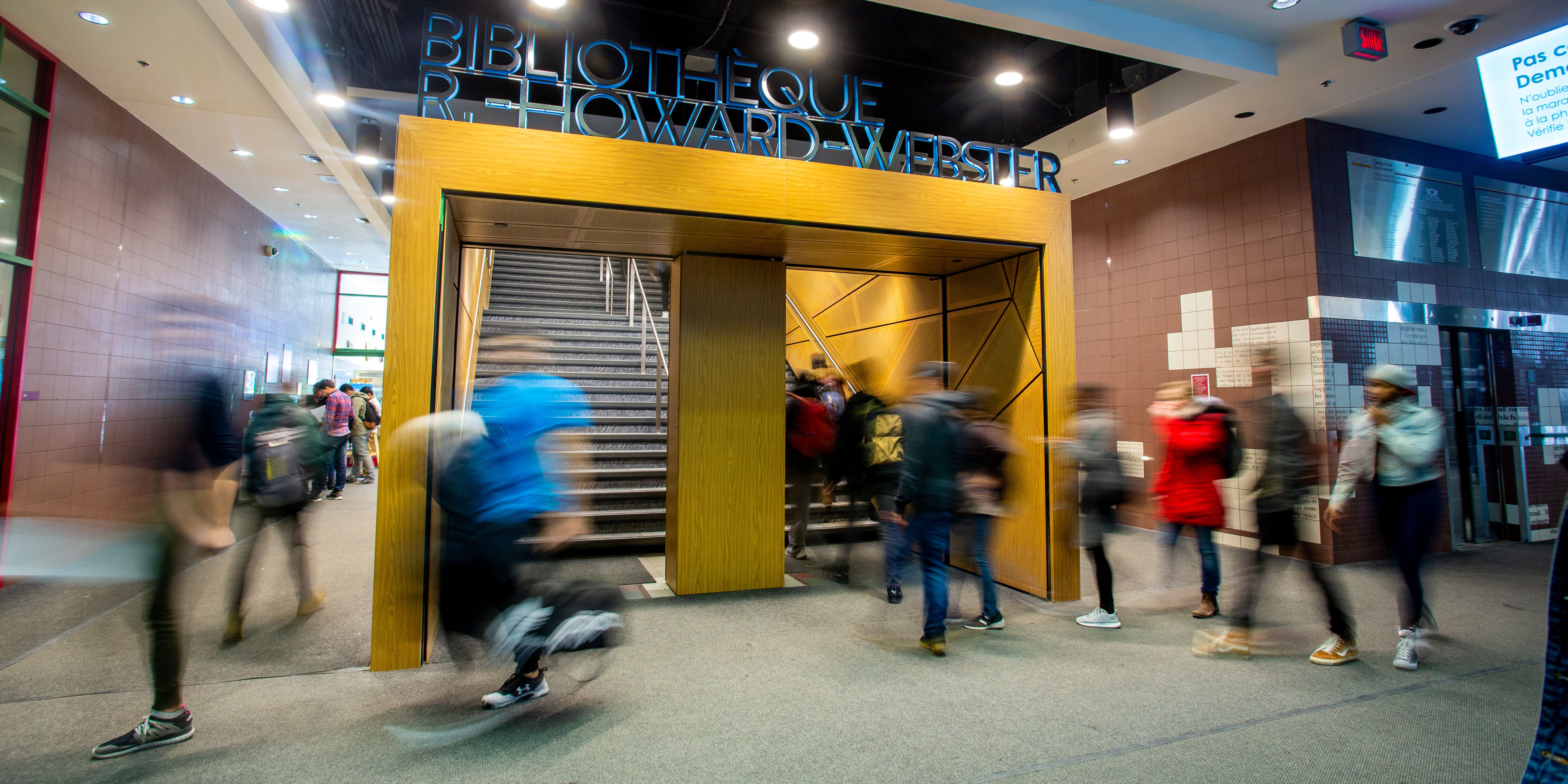
Preserving collections
Digitization of at-risk audio-visual collections
The Library’s Special Collections and Archives has worked to identify and digitize at-risk analog audio-visual items in its collections. To help ensure that the content stored on magnetic media, including audio and video reels, UMatic tapes, and audio cassettes, remains accessible into the future, it is essential to digitize and preserve alternate copies.
Among the recordings being digitized are a significant number of items from artist-run centres in Quebec, predominantly from 1970 to 1999, showcasing the works of creators working outside of mainstream cultural scenes. They contain recordings of live music events, performances, exhibitions, artworks, and conversations with artists, musicians, performers, actors, and other creators from Quebec’s Black, People of Colour, 2SLGBTQI+, and alternative and counterculture arts communities.
Oral history collections
In partnership with the Centre for Oral History and Digital Storytelling (COHDS), the Library’s Special Collections and Archives has been working to transfer and preserve the audio-visual oral histories gathered by COHDS since their founding in 2006. This project is possible thanks to expertise developed in preserving oral histories through the Library’s previous involvement as research partners in the SpokenWeb project. The Library will preserve originals and copies of these important histories, helping to ensure that they are accessible for teaching, learning, and research in the long-term. This transfer project will continue throughout 2026 and 2027.
Significant resource: Esmeralda Thornhill fonds
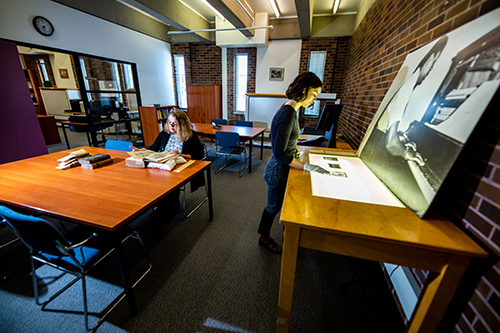
In 2025, the archive of the esteemed Dr. Esmeralda Thornhill arrived at Special Collections and Archives. Among her many accomplishments, Dr. Thornhill was a founding member of the Congress of Black Women of Canada and the first Black woman in Canada to hold a tenured position as Full Professor of Law (Dalhousie). She also taught the first ever university-accredited course on Black Women’s Studies at Concordia’s Simone de Beauvoir Institute (1984).
The Esmeralda Thornhill fonds documents the life and contributions of Dr. Thornhill and provides significant insight into Canada’s Black communities and histories. This archive is currently being processed and will be available for consultation shortly.
Supporting researchers
Scholarly infrastructure
The Spectrum repository provides infrastructure for open scholarship, designed to preserve and centralize access to research created at Concordia. Concordia researchers can deposit their preprints and accepted journal manuscripts in Spectrum to make their work openly accessible, satisfying many funding agency requirements. In addition, theses, conference papers, book chapters, presentations, and other research outputs that reflect our community’s scholarly and creative activity can be uploaded.
1,005 new Concordia research outputs were deposited into Spectrum in 2025–2026 (including theses), an 18% increase from the previous year.
Support for funding agency compliance
In response to the Tri-Agency and Fonds de recherche du Québec (FRQ) transition to the Narrative CV assessment this year, the Office of Research and the Library collaborated to provide Narrative CV support for Concordia researchers. Six in-person workshops were held at the Vanier and the Webster Libraries, engaging 115 researchers and strengthening institutional readiness for evolving grant evaluation requirements. The Library continues to hold Data Management Plan (DMP) workshops focusing on Tri-Agency DMP requirements and tools and maintains resources for developing exemplary DMPs. As research data management requirements expand, the Library will be prepared to meet the demand for these sessions.
Concordia University Press: open access to knowledge
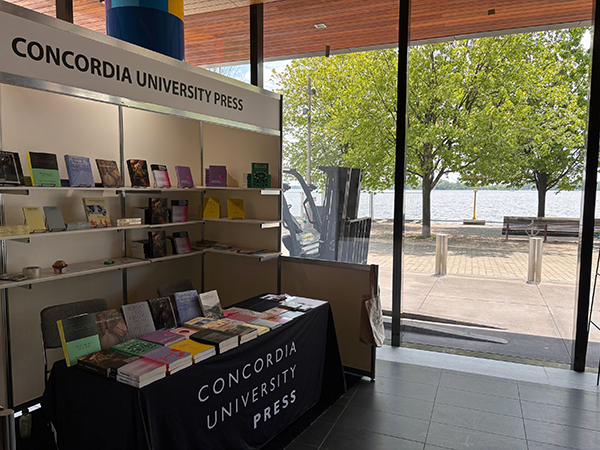
Concordia University Press, a nonprofit open-access publisher of peer-reviewed books based in the Concordia Library, is celebrating the tenth year since its launch in 2016. The Press was founded to encourage barrier-free access to scholarly books, and it is one of the few North American-based university presses to guarantee publication of all its works in free digital editions. The Press’s mission ensures research and knowledge are available to both scholars and the general public, and these works influence new directions in scholarship and make an impact in public awareness of social, political, and cultural forces.
With a growing list of publications in fields such as art history, architecture, gender and sexuality studies, and cultural studies, the Press regularly wins recognition for the design of its print editions, and its authors have received awards from academic associations. Books and authors published by the Press are regularly covered in regional, national, and international publications and media.
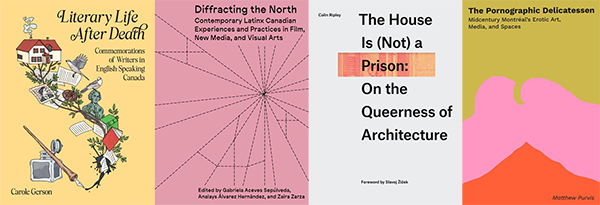
Concordia University Press published four new titles in 2025–2026:
- Literary Life After Death: Commemorations of Writers in English-Speaking Canada by Carole Gerson
- Diffracting the North: Contemporary Latinx Canadian Experiences and Practices in Film, New Media, and Visual Arts edited by Gabriela Aceves Sepúlveda, Analays Álvarez Hernández and Zaira Zarza
- The House Is (Not) a Prison: On the Queerness of Architecture by Colin Ripley
- The Pornographic Delicatessen: Midcentury Montréal's Erotic Art, Media, and Spaces by Matthew Purvis
These titles, as well as past titles, are all available for sale through the traditional book market, but also available for free on Spectrum, Concordia’s institutional repository, and on Manifold, a platform hosted by the Library. The Press’s titles are purchased and read all around the world, with as much as one third of annual sales to the US and overseas. Such reach shares the innovative research of Canadian scholars, spreads awareness of Concordia University’s ongoing commitments to open scholarship and promotes the institution’s name as a leading place of research innovation and interdisciplinary activity.
Supporting teaching and learning
Cost savings
Course reserves
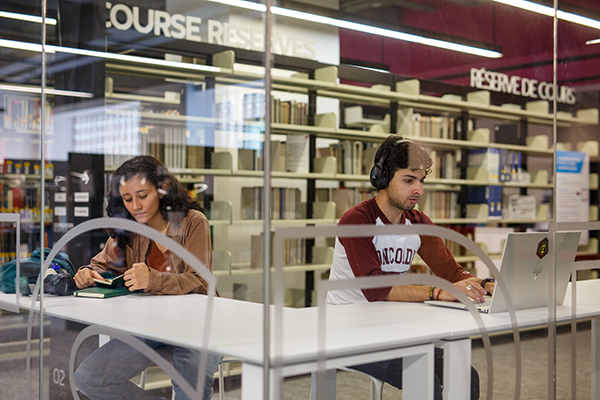
The Library’s Course Reserves service allows students to borrow print copies of readings assigned for their courses or access digital versions when available—all for free, thanks to the Library Services Fund. If all students enrolled in 2025–2026 courses purchased their assigned course materials, they would have spent a total of approximately $14M ($7.7M for the fall term and $6.4M for winter). If students instead borrowed course materials from the library, they would each save an average of approximately $130 per textbook, sometimes up to $400 per course.
Open textbooks
Open textbooks offer students financial savings, tailored learning, and enhanced accessibility for Concordia’s diverse learners. The Library’s Open Educational Resources (OER) program provides funding and publishing infrastructure to support the adoption, customization, and creation of open textbooks for use in undergraduate courses.
In courses where an open textbook was used in 2025–2026, each student saved an average of $97 per course compared to purchasing a commercial alternative. Concordia students have reported that cost savings on textbooks allow them to spend money on rent, clothes, shoes, vet bills, hobbies, therapy, movies and food.
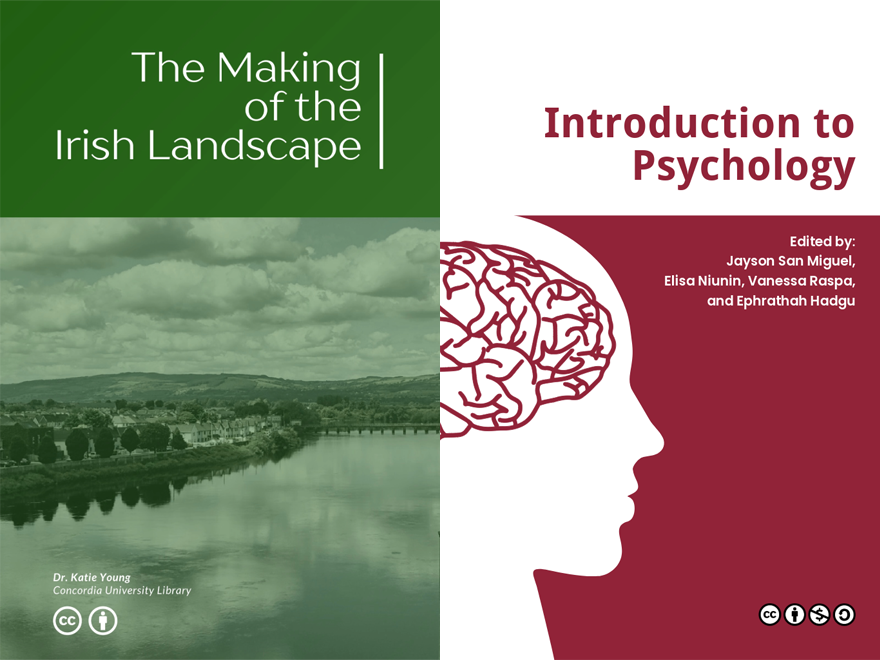
The Library has 12 active open textbooks and 7 in progress. Two open textbooks were launched in 2025–2026:
- The Making of the Irish Landscape, by Katie Young for the cross-listed special-topics course IRST398 GEOG343.
- Introduction to Psychology, led by Jayson San Miguel for the course PSYC 205, with roughly 650 students taking the course over two terms per year.
Open textbooks used in Concordia courses can be accessed by anyone anywhere. The Library’s open textbooks receive the most visitors from Canada, the United States, India, the Philippines, and the United Kingdom. Lifespan Development - A Psychological Perspective received 120,112 unique visitors; Creating The Modern: Intersections of Art & Society in the Nineteenth Century has received 9,159 unique visitors over time.
Teaching collaborations
Students make excellent use of library spaces and resources in all the usual ways, but the Library can also be a site for very creative experiential learning! Collaborating with the Faculty of Fine Arts, we welcomed undergraduate students in a course on site-specific performance who developed and gave a series of small performances in the Library—all while respecting our code of conduct policy so as not to disturb the work of others. In areas that allow conversation, you might encounter a small theatrical exchange; in a quiet area, there may be a brief, silent dance.
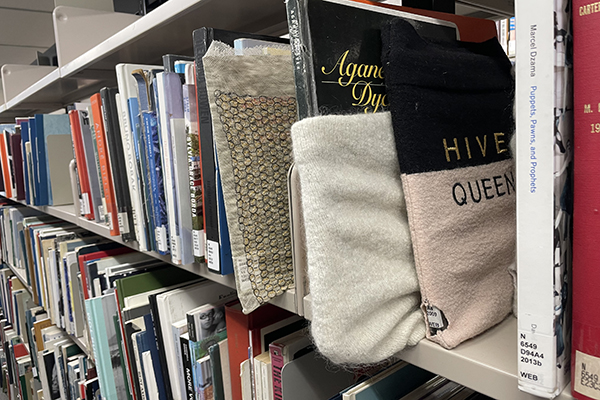
In another recent example, a graduate seminar, Pedagogies of Care, had students deeply engage with publications from our stacks and then “materialise gestures” within each source for future readers, such as inserting a poem or drawing into a book, a QR code connecting to other media, etc. We are very open to discussing ideas from across faculties for experiential learning possibilities in the Library.
Fast facts 2025–2026
2,925,334
titles held
Concordia Library offers relevant scholarly resources to support teaching and research
295
fonds/collections Special Collections and Archives
Special Collections and Archives preserve and provide access to unique collections for research, learning, and community engagement
21,801
total items now in Spectrum with 8,741,513 downloads to date
Concordia’s research is freely accessible to the world through the open access research repository Spectrum
9,244
course textbook loans
Students rely on textbook loans to complete their studies
1,748,955
visits to Webster and Vanier Libraries
Library learning environments are among the most visited places on campus
85%
amount of time group study rooms are booked during academic year
The Library provides highly sought-after student study space
12,992
laptops and tablets borrowed and 50,000+ hours of onsite workstation use
The Library meets the technology needs of all students regardless of whether they own devices
25,119
research and reference questions answered
Expert staff at the Library connect students and researchers with relevant resources and services for their needs
231
workshops delivered to 8,453 participants
Information and digital literacy sessions teach critical skills in finding and evaluating information and using new technology
$8.2 million
in collection expenditures, 98% on digital resources
Library collection stewardship puts research and teaching needs first
Methodology
For laptops and tablets: Estimate based on 12,945 loans × $25 per loan, for a total of $323,625. The $25 rate was derived from short-term device rental rates (~$50/day) at comparable universities.
For calculators, chargers, cables, headphones, and headsets: These loans represent an additional $101,430 in estimated cost savings, based on 25% of the Library’s internal replacement cost for each item, multiplied by the number of loans.
For interlibrary loan: Estimate based on 8,693 fulfilled borrowing requests × an estimated individual purchase cost of $56 CAD per item, for a total of $486,808 (rounded to $487,000 in the report).
For course reserves: Potential purchase costs were calculated using Fall 2025 and Winter 2026 bookstore/course-adoption lists. Course-section enrolment was multiplied by the listed retail price of each assigned textbook/material. The semester update lists were consolidated and overlapping course/material entries were removed, resulting in an estimated potential purchase cost of approximately $14 million.
For open textbooks: Potential savings were calculated using course capacity × the cost of the commercial textbook replaced by the OER, or the estimated cost of a comparable commercial textbook.