

2026 Webster Library Exhibitions
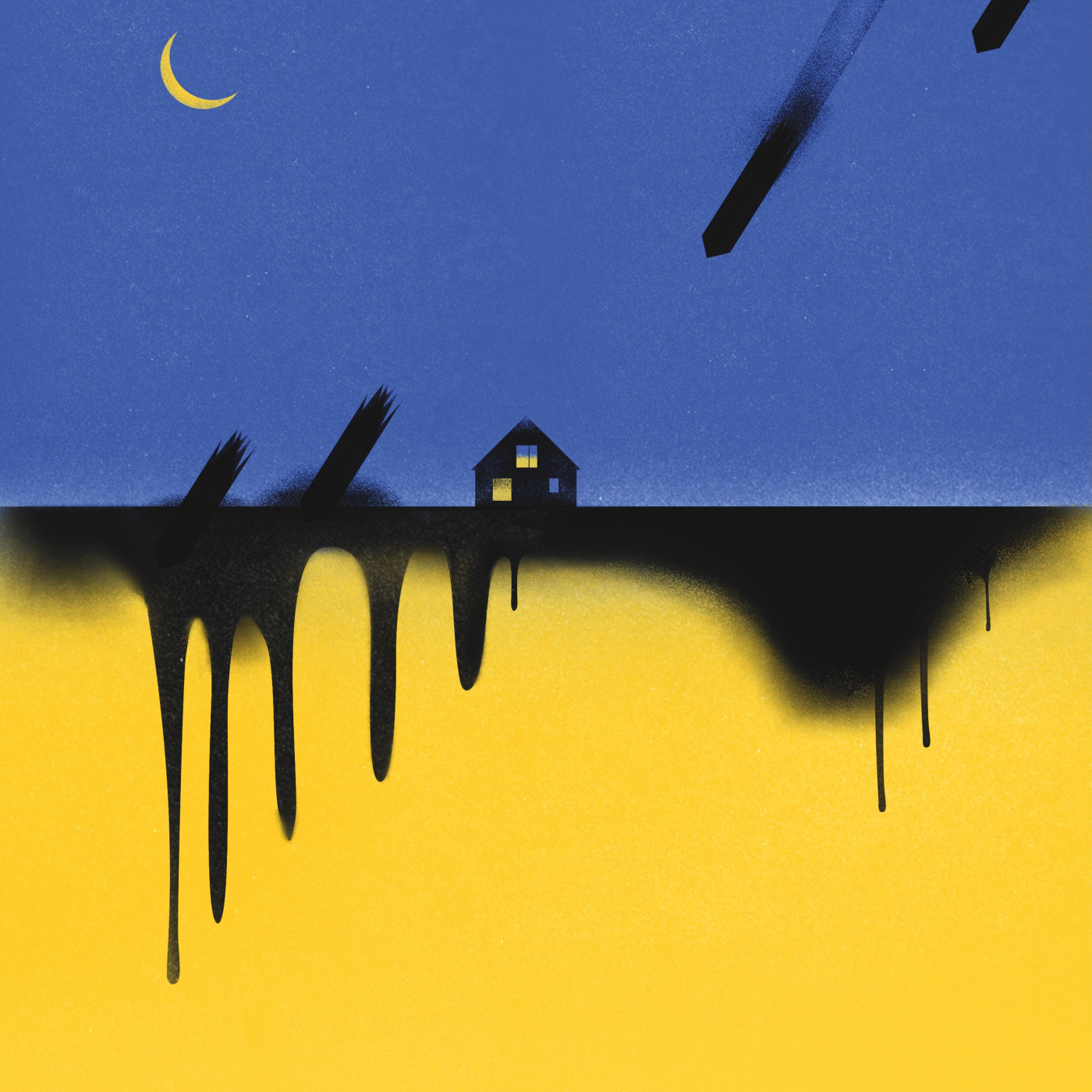
UKRAINE: NO FILTER
April 1 – June 30, 2026
Webster Library, LB-2 vitrines and Discovery Counter
Access the discovery counter exhibitionThis exhibition is curated by Olha Holovko (Club Ukrainien de Montréal) and Olya Zikrata (FRQ Postdoctoral Fellow, School of Communication, SFU; Affiliate, Center for Sensory Studies, Concordia).
UKRAINE: NO FILTER brings together selected works from four projects – Books Destroyed by Russia, Unissued Diplomas, 4th Block: Chornobyl, and As For Now, It Is Quiet / Listen Live – to confront the cultural, material, environmental, and human cost of Russia’s ongoing war against Ukraine.
What is at stake in this war is not only territorial expansion, but the destruction of Ukrainian statehood and the erasure of Ukrainian culture and identity. Russia targets universities, publishing houses, and cultural institutions. It claims the lives of Ukrainian students and scholars, burns archives and library collections, and attacks the very spaces where knowledge and memory are created and preserved.
Books Destroyed by Russia presents books destroyed in the 2024 Russian strike on the Factor-Druk printing house in Kharkiv, which killed seven and injured 22 employees. More than 100,000 books, including children’s literature intended for classrooms, were incinerated. Since then, over 200 million books have been destroyed across Ukraine. The exhibition extends beyond this single site to trace the wider devastation of Ukrainian cultural infrastructure, including the destruction of 214 libraries and damage to more than 858 others, as Russian attacks continue to escalate.
Unissued Diplomas, a commemorative exhibition launched by students at the National University of Kyiv-Mohyla Academy in Kyiv, honors Ukrainian students who will never graduate. Their diplomas remain unissued because they were killed in classrooms or on the frontlines defending their country against Russian aggression.
4th Block: Chornobyl, an international poster triennial founded by Chornobyl disaster liquidator Oleh Veklenko from Kharkiv, highlights the continuity of Russian imperial violence – from the militarization of Chornobyl to attacks on Ukraine’s current nuclear facilities as part of a deliberate strategy of nuclear terror.
As For Now, It Is Quiet / Listen Live, a collective audio stream project presented in two iterations, guides listeners through the soundscapes of everyday life in wartime Ukraine. Its latest title references announcements of temporary safety after the Russian attacks on Ukrainian cities.
UKRAINE: NO FILTER insists on uncompromising witnessing. It invites audiences to confront Russia’s war against Ukraine as an assault on the foundations of academic and cultural life. Ukrainian universities, libraries, publishing houses, and cultural institutions are part of the global intellectual ecosystem. By targeting them, Russia undermines the networks of knowledge, memory, and culture that connect all of us.
In presenting the documentation of Ukrainian environments, whether through visual, sonic, or archival traces, this exhibition makes the consequences of violence tangible. It urges audiences to recognize the stakes of Russian aggression. Looking without a filter may be uncomfortable, but looking away would mean ignoring a system of violence that will only extend its reach unless it is firmly and collectively confronted.
The exhibition, presented in collaboration with Club Ukrainien de Montréal, features a Terra Invicta book talk by Dr. Adrian Ivakhiv and a conversation with him at Concordia as part of its programming.
Related events
Book Talk by Dr. Adrian Ivakhiv
Date/time: April 22, 2026, 5:30–7 p.m.
Location: McGill University, Arts Building, Room 160, 853 Sherbrooke Street West
What do climate change, genocide, and ecocide have to do with each other? Perspectives from the Russo-Ukrainian War
Conversation between Adrian Ivakhiv and curator Olya Zikrata
Date/time: April 23, 2026,12–2 p.m.
Location: SHIFT Centre, J.W. McConnell Building LB-145, Concordia University

Montreal social justice activism in print 2000 - 2025
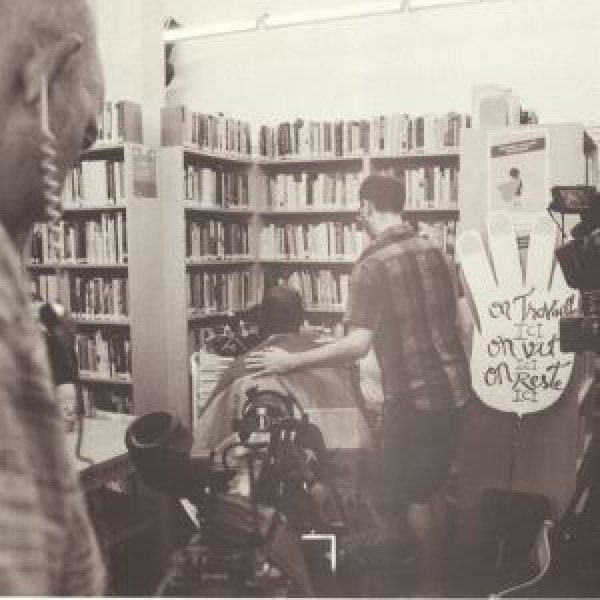
Media event for a bisexual Guinean asylum seeker. Photographer: Philippe Teixeira St-Cyr. Concordia Special Collections and Archives. Stefan Christoff collection (C047), C047-02-06. 2019.
January 19 – March 25, 2026
LB-2 vitrines and Audio Stairwell
This exhibition showcases print material created in the context of different community organizing campaigns and grassroots collective struggles in Montréal. The works on public display include zines, posters and photographs.
Curated by community organizer, artist and Concordia graduate student in the History Department, Stefan Christoff, all the selected materials are a part of a recently acquired special collection, the Stefan Christoff Collection (CO47), housed in Concordia’s Special Collections and Archives.
This display is an opportunity for students and community members to engage with a living archive of print material that speaks to recent collective, non-governmental organizing efforts in the city. The works show the organic intersections between local struggles for justice and the arts, examples of collaboration between cultural workers and community organizers.
There are three particular focus points in this exhibition embodied within the print material: struggles for climate justice as interlinked with Indigenous land rights, grassroots organizing work to lift up the rights of immigrant and refugee communities as part of broader struggles against racism, and the movement to support Palestinian freedom.
The three focus points in this exhibition emerge from the actual content that is being presented which was all, without exception, created in contexts of active collaboration alongside groups and individuals from the directly impacted communities touched on a daily basis by the key contemporary issues outlined.
Activism in Print builds on research that Christoff has been doing to create routes for archiving the often ephemeral papers and materials of grassroots community organizing efforts. Importantly, this exhibition is a tool through which to find pathways to activate and mobilize such archives into a context of public popular education on campus and beyond.
Activism In Print takes place in collaboration with the Social Justice Centre at Concordia University, CKUT 90.3 FM and Raah Media Research Lab.
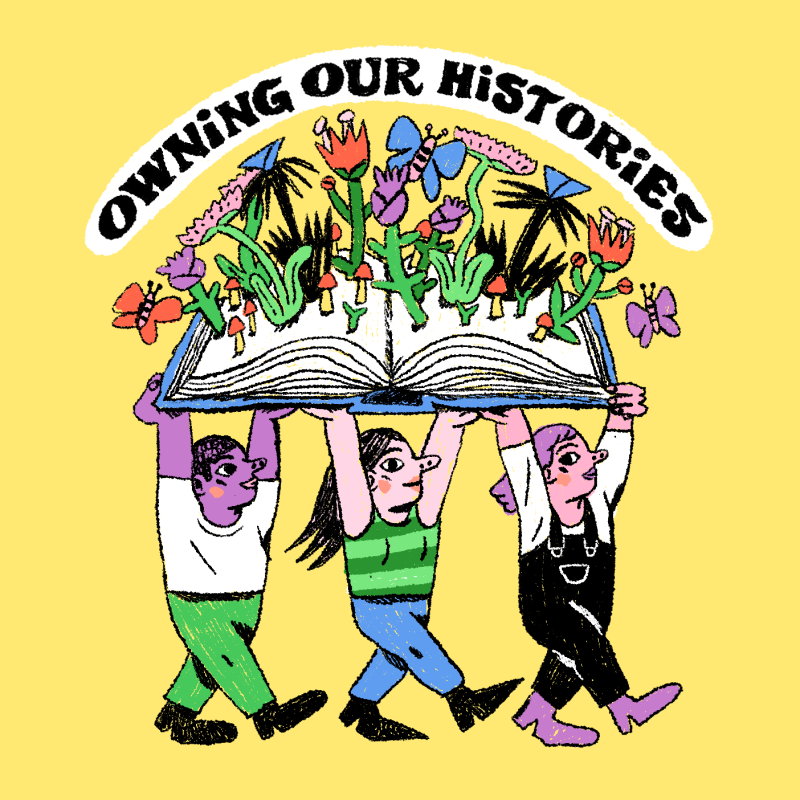
Owning Our Histories Zine Exhibit: Celebrating DIY Archives from Queer and BIPOC MTL
February 13 – March 17, 2026
LB-2 wooden display cases and Discovery Counter
This exhibition showcases radical English-language zines from Montreal's queer and BIPOC communities.
The exhibit will feature dozens of rare and important zines from the 1980s to today from Montreal and elsewhere, from riot grrl zines to beautifully produced queer and BIPOC expressions. Zines have always been how communities document themselves. For generations, Montreal's queer and BIPOC artists have used this accessible, DIY format to capture the full spectrum of their lives: handmade artists' books, community magazines, organizing manuals that hold political work, creative experiments, humor, rage, and joy.
These are grassroots archives, not institutional collections. They're built by the communities they document. Started without permission. Made with whatever resources were available. Preserved because people recognized that what they created mattered, even if mainstream institutions didn't.
Zines are cheap to produce, easy to distribute, and impossible to censor. This fluidity has made them the perfect medium for documenting what gets left out of official records. These collections represent what communities chose to make, share, and save. They're proof of continuous DIY cultural production spanning decades.
The zines in this exhibit are drawn from the collections of ARCMTL/ Expozine, the Concordia Fine Arts Reading Room, Les Archives gaies du Québec, QPIRG Concordia, and QPIRG McGill.
This exhibit is part of "Owning Our Histories: Celebrating Queer BIPOC DIY Archives", a series of ten free public events (February 13 – March 29) exploring how communities create, share, and preserve their own histories. This project is made possible in part thanks to funding from the Government of Canada.
Owning Our Histories was curated by ARCMTL, whose Mile Ex documentation centre holds the last 24 years of Expozine (North America's largest bilingual zine fair), Distroboto (a network of art vending-machines), and the ephemera of the city’s DIY publishing scene. In addition, the exhibit features zines from the collections of the Concordia Fine Arts Reading Room, Les Archives gaies du Québec, QPIRG Concordia; QPIRG McGill, selected by their archivists.
Vernissage; Curator Talk: February 13, 4–6 p.m., LB-361 (Friends of the Library Room)
For more information – arcmtl.org